HP Inc. carries the personal computing and printing businesses of Hewlett-Packard, the company founded in a Palo Alto garage in 1939 that became the original Silicon Valley startup. Since the 2015 split that created Hewlett Packard Enterprise, HP has focused on personal systems, printing, 3D printing, and the services and subscriptions around them, with tens of thousands of employees serving customers in more than 170 countries.
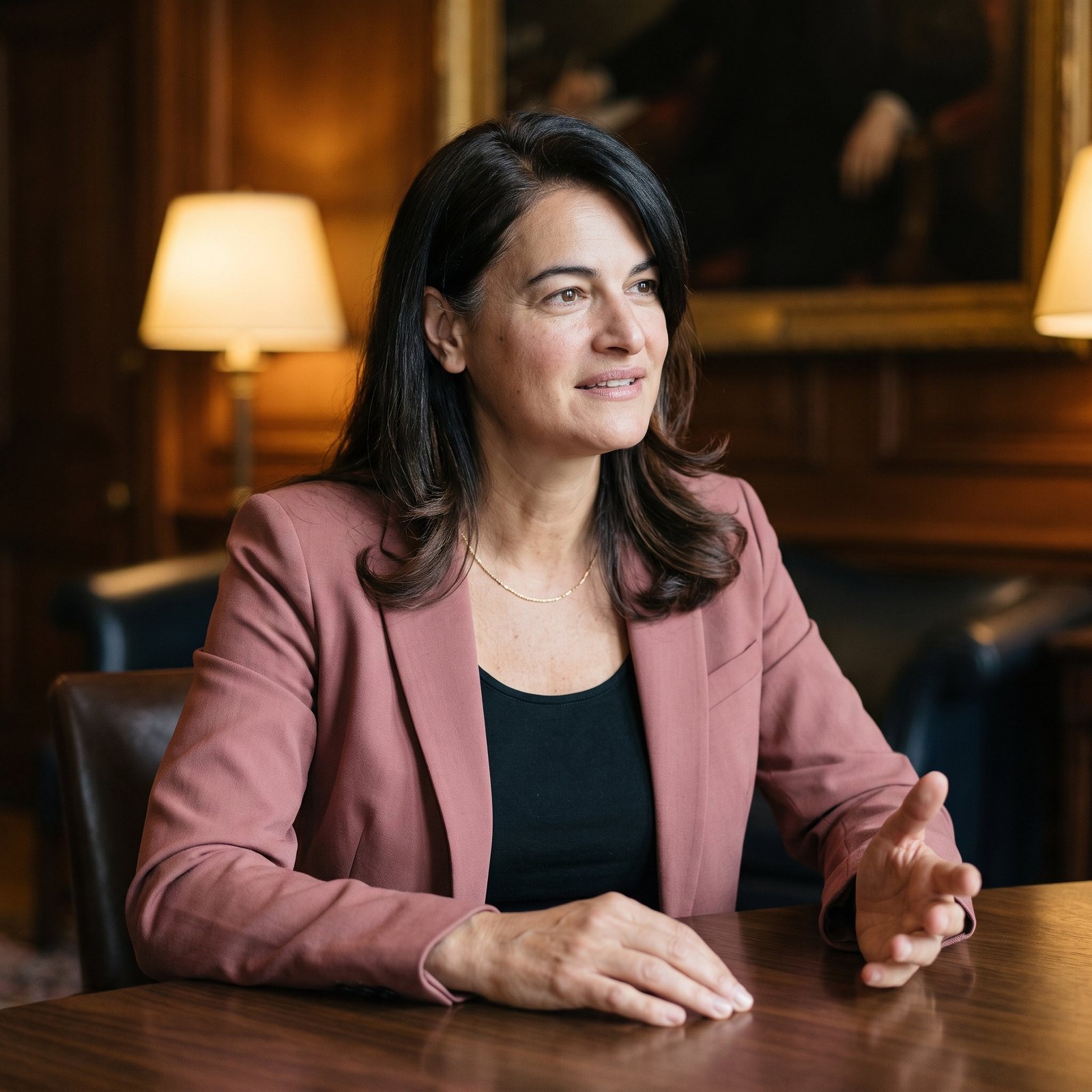
Ceyda Maisami is HP’s Chief IP Counsel, leading the company’s global IP strategy and a team of attorneys, paralegals, and analysts across patents, trade secrets, trademarks, and copyrights, along with pre-litigation, M&A, and transactional support. She joined Hewlett-Packard more than a decade ago after practicing patent prosecution and litigation at Finnegan and Chadbourne & Parke, and before law she worked as an electrical engineer at Osram Sylvania. She is a frequent speaker on IP leadership and a member of IAM’s Strategy 300.
Ceyda Maisami is HP’s Chief IP Counsel, which in her words means she’s “a little bit of a business person, a little bit of a legal person, and a little bit of a leader.” Over more than a decade at the company she has held multiple roles and seen many more acquisitions, restructurings, and changes in company strategy, most notably “the split” between HP and HPE. Here, Ceyda recounts how HP’s IP team has evolved with the business and shares her own experience of turning change into growth.
The element of change is very dominant at HP. It’s part of how we do what we do.
HP: defining personal computing from the very beginning
Hewlett-Packard’s first product was an audio oscillator used to measure and test sound. Its big break came in 1938 when it won the contract to supply audio oscillators to Disney’s production of Fantasia. Over the remainder of the century, the company grew into a multinational corporation and the world’s leading manufacturer of PCs from 2007 to 2013, selling everything from personal computers to servers, storage, networking, software, and services. In 2015, “the split” happened: Hewlett-Packard became two companies. Hewlett Packard Enterprise carries on the enterprise business, while HP Inc. holds the portfolio of personal computing systems and printing solutions. According to Ceyda, HP’s R&D priorities in personal computing include putting AI into its products, supporting hybrid office technology, gaming, 3D printing, and healthcare.
How HP’s IP team has kept its structure, strategy, and relationships current
Team structure. When Ceyda started at Hewlett-Packard, her role was heavily focused on patent prep and pros work, similar to what an IP attorney would do at a law firm. Since then, HP’s IP roles have shifted in two key ways:
- Away from hands-on patent work and toward facilitating business conversations with different groups within HP’s engineering and technical communities.
- Away from patents and transactions as separate niches and toward a model of IP generalists who are responsible for all IP aspects of a client’s business. To stretch team members, they’re even given the option to rotate through other aspects of IP beyond patents, such as litigation or M&A.
The reason Ceyda left the law firm route to go in-house was her interest in business. HP’s business-based IP structure shows that she picked the right place, and it reflects the understanding that an effective IP practice is a blend of both law and business.
Strategy. Like many others in the industry, Ceyda reports that building and maintaining HP’s portfolio now runs on quality rather than quantity: “We have very clear expectations, thresholds, and considerations for quality that we take into our conversations with the business, and we’re very open with them.” HP’s emphasis on the relationship between the business and IP teams has made this transition possible, since bringing the business along is often the biggest hurdle in the shift from quantity to quality. As for how the team defines quality, the goal is “to build a portfolio that allows us to use it whenever needed from a defensive perspective to ensure HP’s freedom to operate.”
Outside counsel. Ceyda’s team works with significantly fewer firms than when she began, but has invested more in every remaining engagement. To make these partnerships work, the team gets outside counsel involved early and gives them insight into company-level priorities. That helps shape the claims they prosecute and encourages strategic portfolio building. This way, says Ceyda, “when we’re unable to go for the breadth or depth of what we’re looking to achieve with a specific patent or claims, our outside counsel can easily tell us what needs to happen from a business alignment perspective.”
The team works closely with outside counsel to keep them up to date on HP’s business and strategy, but after that they’re hands off: “We trust them on the prosecution side enough that we don’t necessarily have to be in their everyday work. We’ve taken a step back from being part of drafts and approving all the documents that go between offices.” Quality over quantity applies to outside counsel as well, and investing in relationships and strategy up front saves work in the long run.
Thought leadership. More recently, Ceyda’s team has sought to build its leadership and collaboration with industry players on topics that matter to the company. Instead of just attending conferences, members of her team speak at them. They’ve also sought board seats, committee leadership, and other opportunities for external thought leadership. One topic where HP has become more active is standards essential patents. As an SEP implementer, HP has met challenges in this area, and it has ramped up its response from handling SEP litigation internally and doing limited policy outreach to publicly making counterarguments to governments and through speaking engagements, in order to raise awareness, find partners who share HP’s interests, and craft balanced solutions.
How Ceyda has sustained a long tenure at an ever-changing company
Active growth. Ceyda’s advice for growing in IP is to resist the comfort of silos and expertise. “You have to make the conscious choice to get exposed to new experiences,” she explains, “even though it’s natural to stay within your specialty and grow there. But you’ll hit a wall in your growth if your perspective stays narrow. The concept of being an expert in one area, while rewarding in the moment, can be limiting.” For Ceyda, these aren’t just words but lived experience: “It was challenging to continue to expand several years into my career. It required taking a step back and being the junior person again. It was humbling to be in that position and required intentional effort. It didn’t come naturally.”
HP’s nurturing, growth-oriented environment supported her in taking on projects outside her expertise. If you don’t enjoy such an environment, Ceyda recommends being conscious that others might question your motives, and that you’ll need the flexibility to balance your regular responsibilities with your new ones. Even so, she believes it’s better to recognize earlier than later that “to grow in IP, you need to gain experience across all aspects of it, not just patents.”
To grow in IP, you need to gain experience across all aspects of it, not just patents.
Leading through empowerment. To help her team members reach their full potential, Ceyda takes a behind-the-scenes approach focused on giving them resources and opportunities to develop. She sponsors them in conversations where they aren’t present, so they get recognition for their leadership. Asked how being a woman and a mother has influenced her leadership style, she says those experiences give her less judgment and agenda, and more empathy, caring, and ways to connect. “Having multiple children teaches you that one approach doesn’t work for everyone,” says Ceyda. “You must understand each individual and tailor your approach and communications accordingly.” As a mother of three myself, I couldn’t agree more.
Final thoughts
The evolution HP’s IP team has undergone during Ceyda’s tenure is just as rich as the one the business has experienced. As HP has become its own company, the IP team has shifted toward a generalist model, a quality-over-quantity portfolio, and deeper engagement with outside counsel and industry. Throughout, Ceyda has sought intentional growth and multifaceted opportunities for her team. Her story is a true example of the power of well-rounded, business-led IP leadership.
I met Ceyda at HP when she started, and I knew even then that she was a rockstar. Like her, I made a conscious choice to get exposed to new roles, companies, and experiences in my career, so her story of active growth really resonated with me. A diverse set of experiences broadens your perspective and makes you a better IP professional overall.