
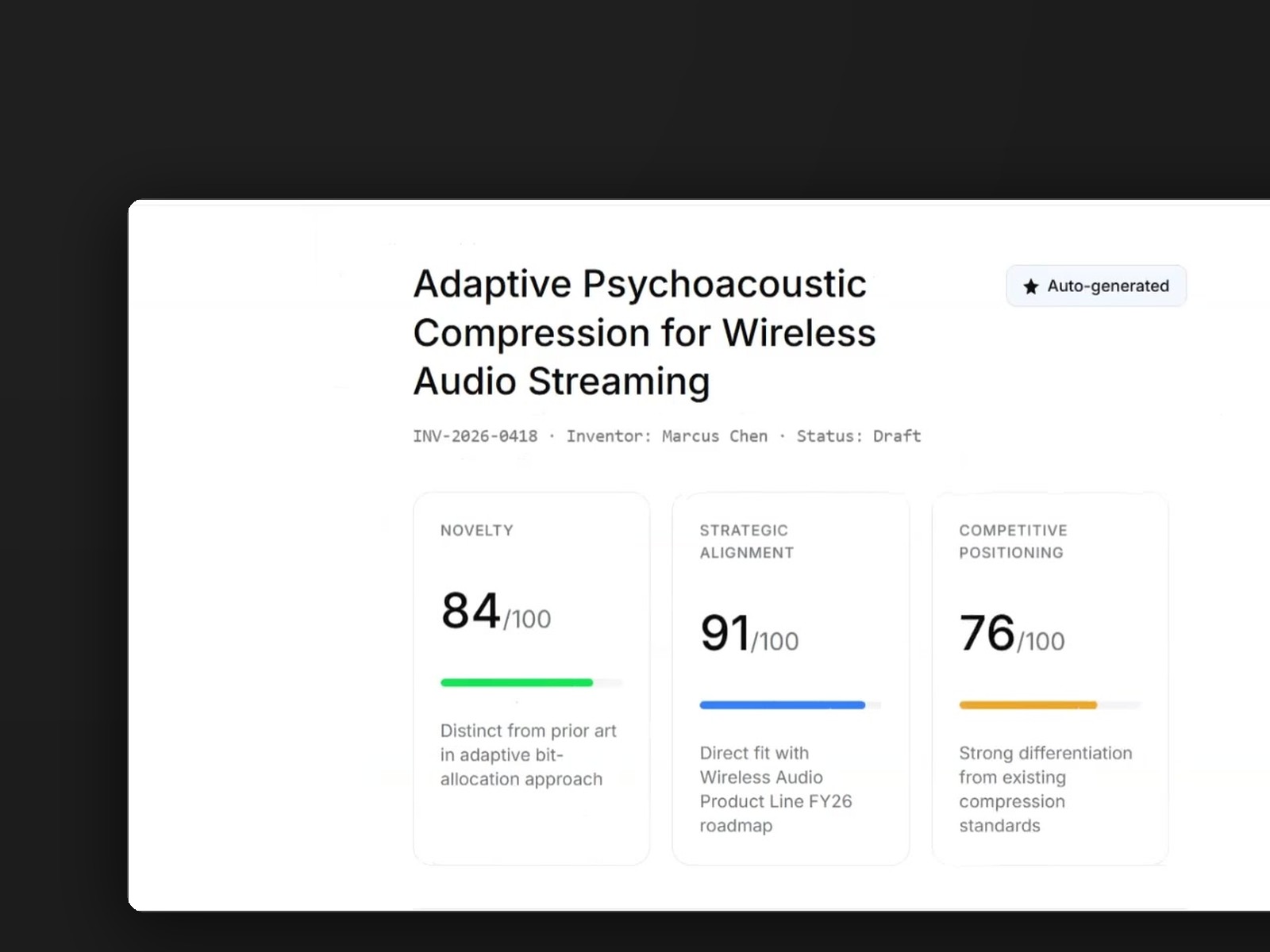
For most engineers, the disclosure is the worst part of inventing. The work is done, the interesting problem is solved, and now there is a form: describe the invention, explain how it is different, list the prior art you know about, find an hour you don’t have. It is the step where good inventions quietly stall. Tradespace changes that math.
Start with what already exists
Inventors don’t start from a blank page. They drop in whatever they were already working on: a pull request, a design review recording, a voice note dictated on the way home, a slide from last week’s update. Tradespace reads it. The invention is usually already in there; nobody has had to write it up yet.
The follow-up an attorney would ask
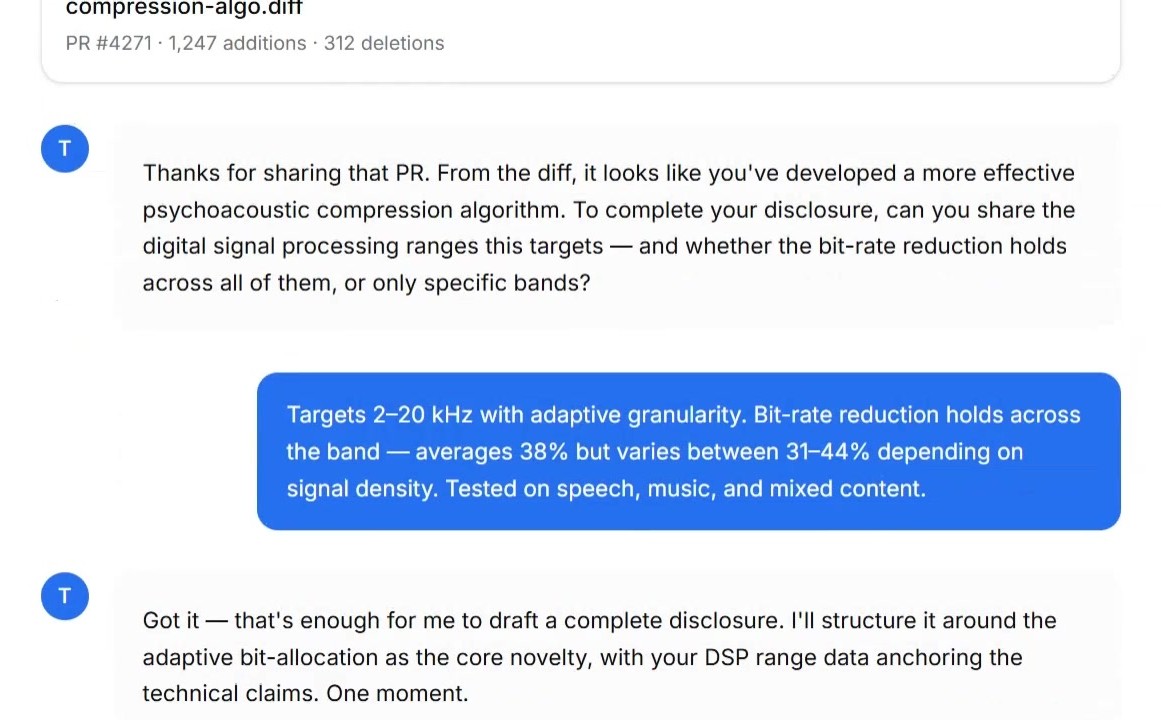
Reading the material is the easy part. What makes a disclosure useful is the conversation that follows, and Tradespace has it. It asks the same follow-up questions an IP attorney would ask in an inventor interview: what range does this cover, does the result hold across every case or only some, what did you try that didn’t work. The inventor answers in a sentence or two, in the tool they are already in.
A complete disclosure, ready for review
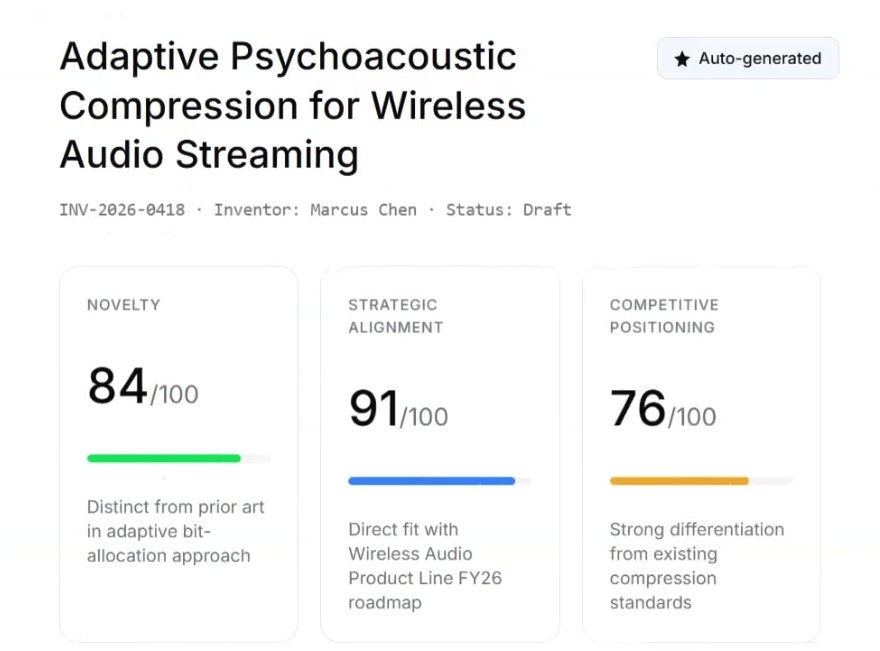
From there, Tradespace drafts the whole thing for the inventor to review: the problem framing, the technical description, the prior art, and a claim strategy with a strategic assessment the IP team can act on. The inventor reads it, corrects what needs correcting, and submits. Their least favorite hour is done in about thirty seconds.
What changes for the IP team
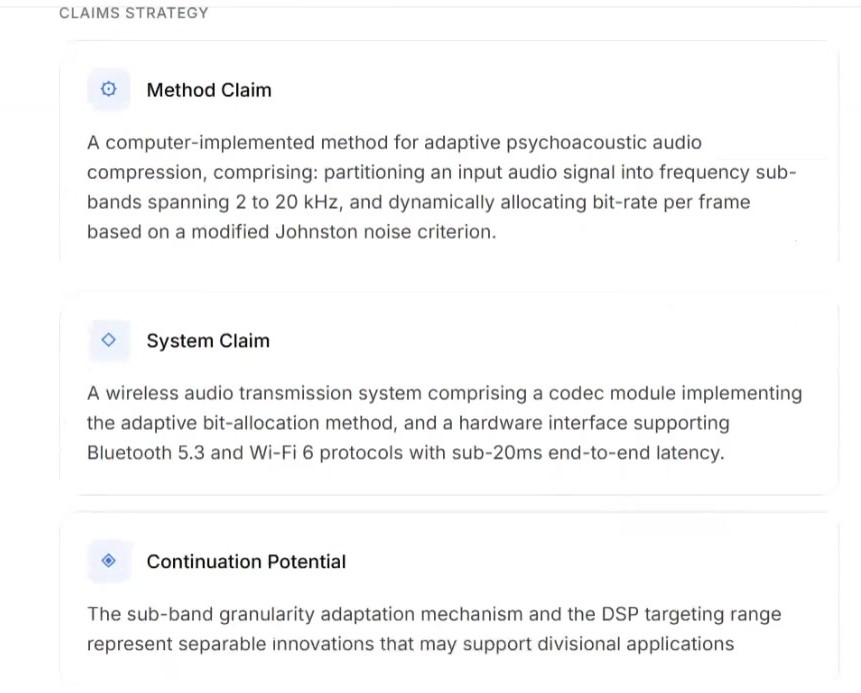
The disclosure that arrives is not a two-line form waiting to be chased. It is a structured document with the technical detail, the prior-art context, and a recommendation already attached, which means the first review is a real review. IP teams stop chasing inventors and start filing.
The inventor’s least favorite hour, done in 30 seconds.
Want to see it on one of your own disclosures? Book a demo and bring a pull request.