ABB is a global technology leader in electrification and automation, headquartered in Zurich and formed in 1988 through the merger of Sweden’s ASEA and Switzerland’s BBC Brown Boveri, with roots that go back more than 140 years. The company employs more than 100,000 people in over 40 countries, runs a decentralized operating model that gives each of its divisions ownership of its own strategy and results, and holds a portfolio of roughly 28,000 granted and pending patents covering everything from motors, drives, and switchgear to industrial software and robotics.
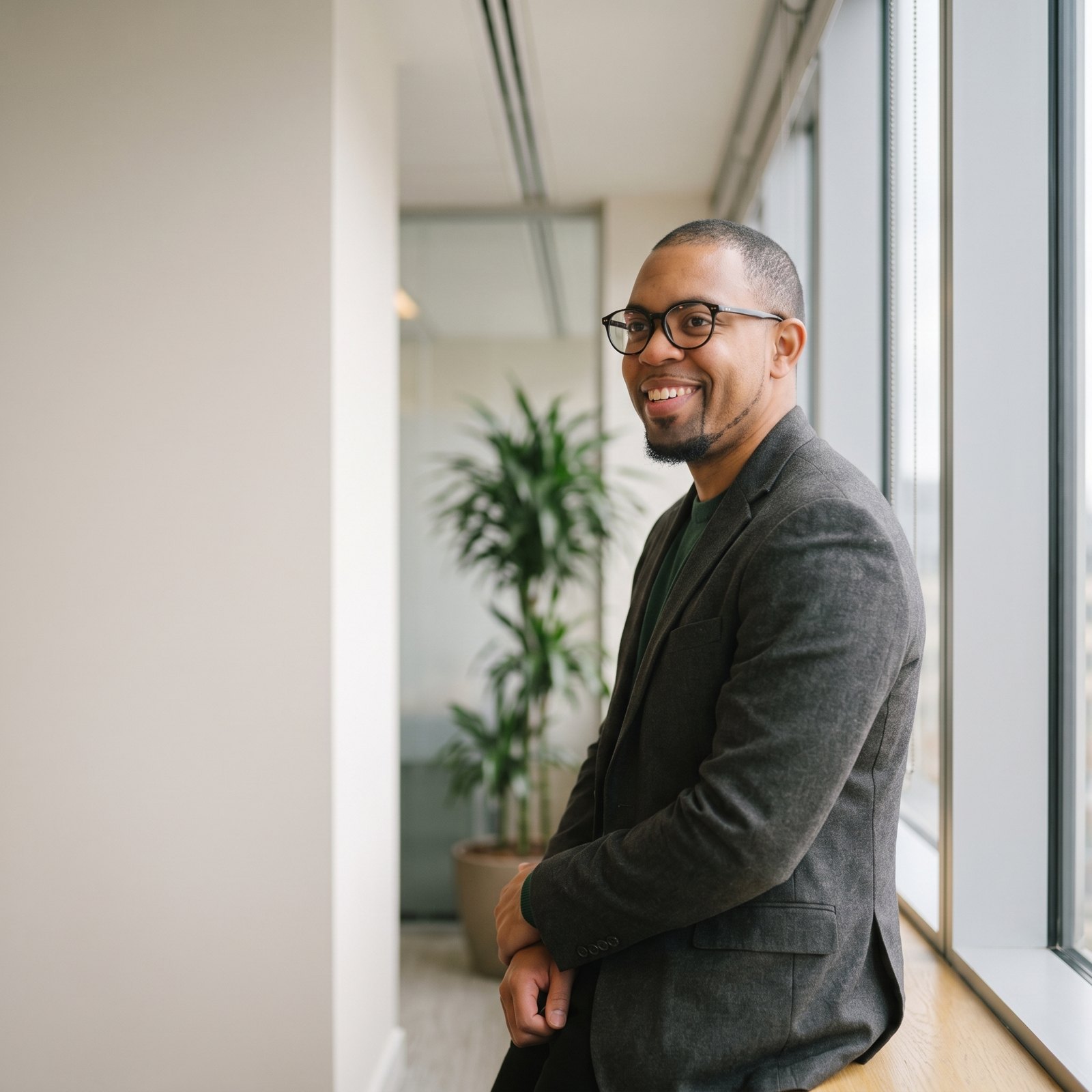
Jeb Shookman is ABB’s Head of IP for the United States and a Vice President, one of the company’s four regional IP leads worldwide. He leads a team of IP attorneys and professionals handling portfolio management, agreements and transactions, M&A support, litigation, and counseling. Before ABB he was Patent Development Director at Hewlett-Packard and HPE, practiced as an IP associate at McAndrews, Held & Malloy in Chicago, and began his career as a computer engineer at IBM. He holds a BS in computer engineering and computer science from the University of Wisconsin-Madison and a JD from the University of Minnesota Law School.
Jeb Shookman is ABB’s Head of IP for the United States. Alongside counterparts in China, India, and Europe, he is one of the company’s four regional IP leads. His team handles every aspect of IP, from managing a portfolio of 28,000 granted and pending patents to providing IP support for agreements, M&A, and litigation when needed, across a vast technology mix that runs from motors and robotics to software and AI.
Working across technologies, jurisdictions, cultures, and time zones at a 140-year-old organization has its inevitable challenges, and Jeb was happy to share his perspective on them.
Leading a global legal team
“The role of an attorney is different in the rest of the world than it is in the US,” Jeb notes. “You need to understand your colleagues’ individual experiences, training, and education on various topics. You can’t just assume they know what your average IP attorney would do in the US.” As for his advice to non-US attorneys working with the US, it’s to “be sensitive to litigation in everything you do.”
Supporting a broad range of products
ABB has a decentralized operating model called The ABB Way, which gives its divisions “full ownership and accountability for their strategies, performance and resources” as they “each aim to be self-sufficient and accountable.” This independence extends to the legal team as well.
The attorneys on my team harmonize on certain processes and tools, but we give them a lot of autonomy to fully understand and support the businesses they’re assigned to.
Training a conglomerate on IP
“We’re such a big company, geographically distributed, highly autonomous, and have different technologies. This all makes it difficult to take a single message and make sure everyone hears it,” explains Jeb in framing the challenge of educating the organization on IP. In response, ABB’s IP Legal team invests in technology like its training platform and creates recorded training content.
Managing trade secrets
“Trade secrets are very important for us, and issues like the new EU Data Act and export control laws in China have forced us to look at it even more closely recently,” reports Jeb. “We put in effort to categorize things well in our database and lock things down from the IP Legal perspective when they’re trade secrets. But good trade secrets management requires cooperation across many non-legal functions in the company, so we try to be good role models in proper trade secrets handling.”
One careless act can destroy a trade secret for the whole company, even if precautions were taken previously.
Software patenting as a mature company
As Tradespace has said before, every company is becoming a software company, and ABB is no exception, even though “a large percentage of our filings are on tangible things where a 101 challenge is less of a concern.” Jeb shares, however, that “the flip side is that when we do file on software, our inventors can be unfamiliar with it. Or they can even have the misconception that software is something we don’t file on because it isn’t patentable. This was a broad misconception many inventors at the company had when I joined, and we’re still working to educate them on this point.”
Preparing for internal AI adoption
“We know we need to use it and make it available to our employees, and we’re getting guidelines in place so we can use it with minimal risk,” says Jeb. “You can’t just have a policy that says no, because inventors are inevitably going to use it.” In addition to a policy that allows for some usage, ABB’s IP Legal team has added a question to its invention disclosure form asking whether inventors were assisted by AI in the inventive process. Within the IP Legal team itself, they’re testing AI tools for writing applications, automatic docketing, checking contracts, and simplifying the invention disclosure process.
Support the business
My conversation with Jeb was a fascinating glimpse into how so many different people and technologies can successfully come together under one company, and one IP team. His last piece of advice to every IP professional out there: “Business people drive the business. If they can’t do what they need to do, the company doesn’t exist. Sometimes legal teams have a tendency to stray down theoretical paths or overanalyze academic issues, but it’s really helpful to step back and remember that in the end, our job is to support the business by understanding their goals and being helpful.”