TAE Technologies is a fusion energy company based in Foothill Ranch, California. Founded in 1998 out of research at UC Irvine by the late physicist Norman Rostoker and CEO Michl Binderbauer, TAE is developing hydrogen-boron fusion power plants built around its beam-driven field-reversed configuration reactors. Along the way its science has spun out two more businesses, TAE Power Solutions in energy storage and power management and TAE Life Sciences in cancer treatment. The company has raised more than $1.5 billion in private capital and holds more than 1,600 granted patents.
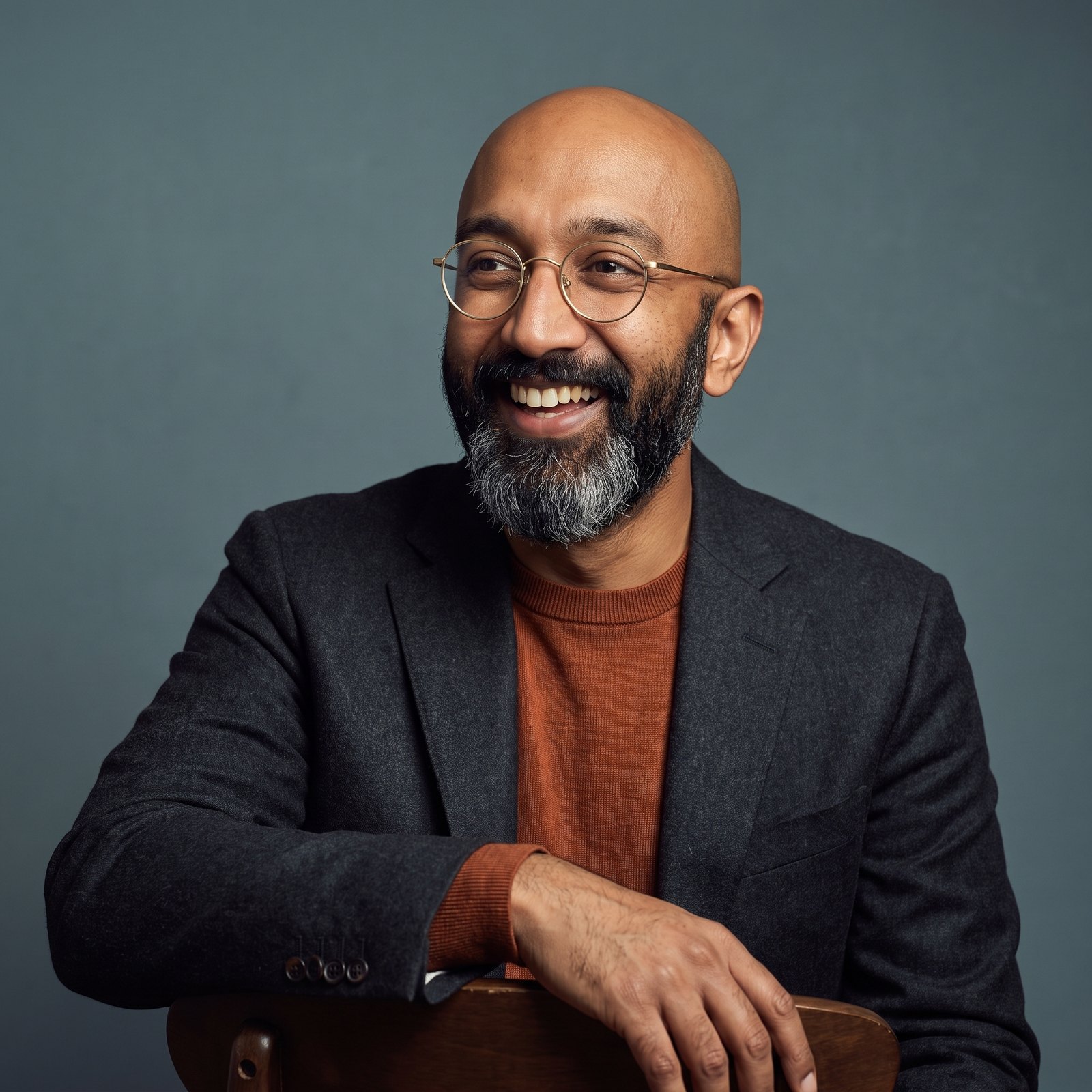
Shrut Kirti is Senior IP Counsel at TAE, the fourth attorney to join the company’s legal team. He helps build TAE’s IP portfolio, crafts its commercial and licensing agreements, manages its open source program, and oversees data privacy, working across the fusion, power solutions, and life sciences businesses. Driven by impact, he chose TAE for the chance to work on technology aimed at both clean energy and cancer treatment.
Being someone who is highly driven by positive impact, Shrut Kirti jumped at the opportunity to be part of a team pushing the knowledge frontiers of energy and cancer treatment. Our conversation turned into a study of how a mission-driven company builds IP into its culture from the very start.
Nuclear fusion and the Sustainable Development Goals
The 17 UN Sustainable Development Goals provide countries with a common framework for advancing the good of the planet, with goals like affordable clean energy and climate action. Fusion power fits squarely into those goals: if achieved, it will generate roughly four million times more energy than oil or coal, cleanly and affordably.
Nuclear fusion is the process of two atoms combining to give off energy. It is what powers every star, including the sun. Not to be confused with nuclear fission, in which atoms split, fusion is four times more efficient as a power source, creates no nuclear waste, and can’t cause meltdowns. The fuel supply is plentiful and accessible, expected to last millions of years.
Scientists have generated energy through fusion in experiments, but they are still working to control fusion reactions well enough to make them a power source. The main barrier is the difference between conditions on Earth and on the sun. Without the sun’s massive gravitational force, temperatures of over 100 million degrees Celsius are required to make fusion happen.
Powering TAE’s innovation through culture, strategy, and IP
TAE has a rich system for supporting and advancing technology this far out on the edge, and IP is an essential part of it. TAE’s CEO is an inventor himself and its general counsel comes from IP, so company leadership understands how important it is to invest in IP from the beginning. To Shrut, IP not only encourages creativity and innovation by providing incentives and legal protections, but also facilitates the spread of knowledge and technology.
From licensing agreements to open innovation initiatives, knowledge sharing through IP promotes collaboration and advances the frontiers of knowledge.
Beyond IP, TAE naturally has a strong research focus. But underneath its individual functions, the whole organization is driven by strong values that leadership actively promotes and reinforces. Those values have attracted people like Shrut who are highly motivated and mission-driven, and who represent more than 50 countries. TAE also collaborates externally with research labs and institutions worldwide.
To manage its long-term objectives and the diversity of its employees, collaborators, and business units as a company of roughly 500 people, TAE relies on a strong strategic planning process. Its long development path is broken into milestones, and Shrut was proud to report that the company has never missed a significant milestone in nuclear fusion.
A holistic view of IP that focuses on the business, culture, and ROI
As attorney number four at TAE, Shrut is responsible for helping build the IP portfolio, crafting commercial agreements, managing open source, and maintaining data privacy. In practice, though, Shrut and his team don’t think of their responsibilities so tactically. “Our North Star, our motto, is that IP strategy should support the business,” says Shrut. “We look at IP holistically, not just through the perspective of patents, trademarks, or licensing.”
One example of that holistic approach is the work the team has done to build an IP culture company-wide. To get multinational employees with different levels of exposure to IP best practices up to speed, IP training is part of new hire orientation. The IP team also holds live training sessions, maintains internal resources like Confluence pages, and reinforces the knowledge with email reminders. The message spreads from the top down too, through relationships with key leaders who repeat it to their teams.
Another way TAE’s IP team practices holistic IP is in how it measures success: emphasizing ROI over singular metrics like filing activity. The team looks at IP coverage at the product and differentiator level, and relative to competitors by country. It actively asks how individual products or technologies might evolve and keeps a rigorous list for identifying and managing IP risks. And it is conscious of holding onto that strategic mentality as the company scales.
This ROI-driven mentality serves Shrut and TAE well when negotiating licensing deals. “I think the biggest misunderstanding IP attorneys have when it comes to licensing is thinking that it’s about the dollars and cents,” says Shrut. “Financial terms are undoubtedly crucial, but they’re just one aspect of a comprehensive licensing agreement.” Negotiating successful deals means addressing a wide range of non-financial terms such as scope, field of use, exclusivity, sublicensing rights, indemnification, and termination. Doing that well requires a deep understanding of the technology, the competitive landscape, potential infringement risks, and the strategic goals of both parties, now and into the future.
The biggest misunderstanding IP attorneys have when it comes to licensing is thinking that it’s about the dollars and cents.
Constant learning and collaboration fuel innovation for good
Shrut’s work on TAE’s IP, licensing, open innovation, and data couldn’t be done without his learning and collaboration skills. He makes a point of staying current on industry trends, regulatory changes, and emerging technologies, plus the goals, priorities, and unique needs of his business units. Then he works across the organization to put what he learns into action, whether with engineers to draft the open source use policy or with HR to ensure GDPR compliance. Like his team as a whole, Shrut keeps the business at the center: “I always ground myself in an understanding of each business unit. This helps me tailor my approach and craft bespoke legal advice.”